.jpg) 01
What Do These Villages Actually Need?
A first-hand development needs study across three rural blocks, carried out with Gram Pradhans and local communities.
Read study details
From learning and livelihoods to community health and climate-resilient agriculture, our programmes focus on the issues that shape everyday life.
.jpeg)
Every community has its own opportunities, challenges and aspirations. Pragyan works across interconnected areas of development, bringing local understanding, appropriate technology and community participation into the process.
Our programmes focus on practical priorities such as access to learning, health outreach, employability, agricultural livelihoods and stronger community institutions.
Connected challenges. Practical action. Our priorities reflect the issues that influence individual well-being and community progress.
Our field studies help identify community priorities. The work underway translates those findings into practical, locally grounded programmes.
Across Lohaghat, Pati and Barakot blocks of Champawat, these studies examined local needs, youth skills, household conditions, farm markets and crop damage. The full study narratives and findings are available on our Our Work page.
01
A first-hand development needs study across three rural blocks, carried out with Gram Pradhans and local communities.
Read study details.jpg) 02
A skill-gap study comparing young people's career preparation with the skills and capabilities local employers need.
Read study details.jpg) 03
A census-style socio-economic survey of Kanwad Gram Panchayat to understand household conditions and access to services.
Read study details.jpg) 04
A study of farming economics and market access, including the barriers that affect local agricultural livelihoods.
Read study details.jpg) 05
A field study of crop damage caused by wild animals and the practical options available to farming households.
Read study detailsExplore the complete context, approach and findings for all five studies.
Go to Our WorkFive connected programmes shaped around the development priorities identified through field engagement.
 EDUCATION AND SKILLING
01
Career guidance, skilling and employment readiness.
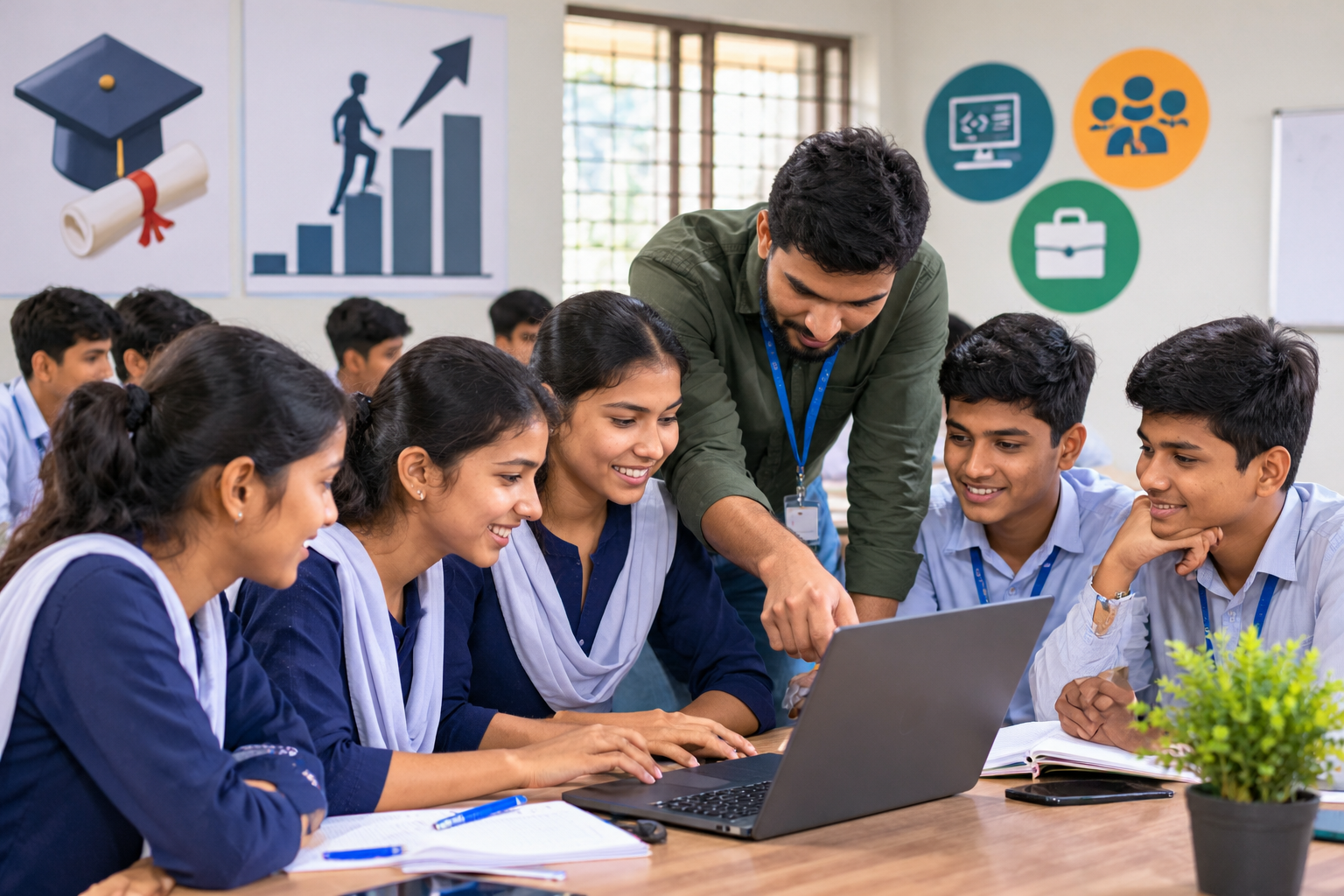
Project Unnati is designed to help young people plan careers, understand possible pathways, build workplace and digital skills, and prepare for employment or self-employment. Career guidance and employability sit together under this single programme.
 AGRICULTURE AND LIVELIHOODS
02
Climate-resilient agriculture, FPOs and Panchayats.
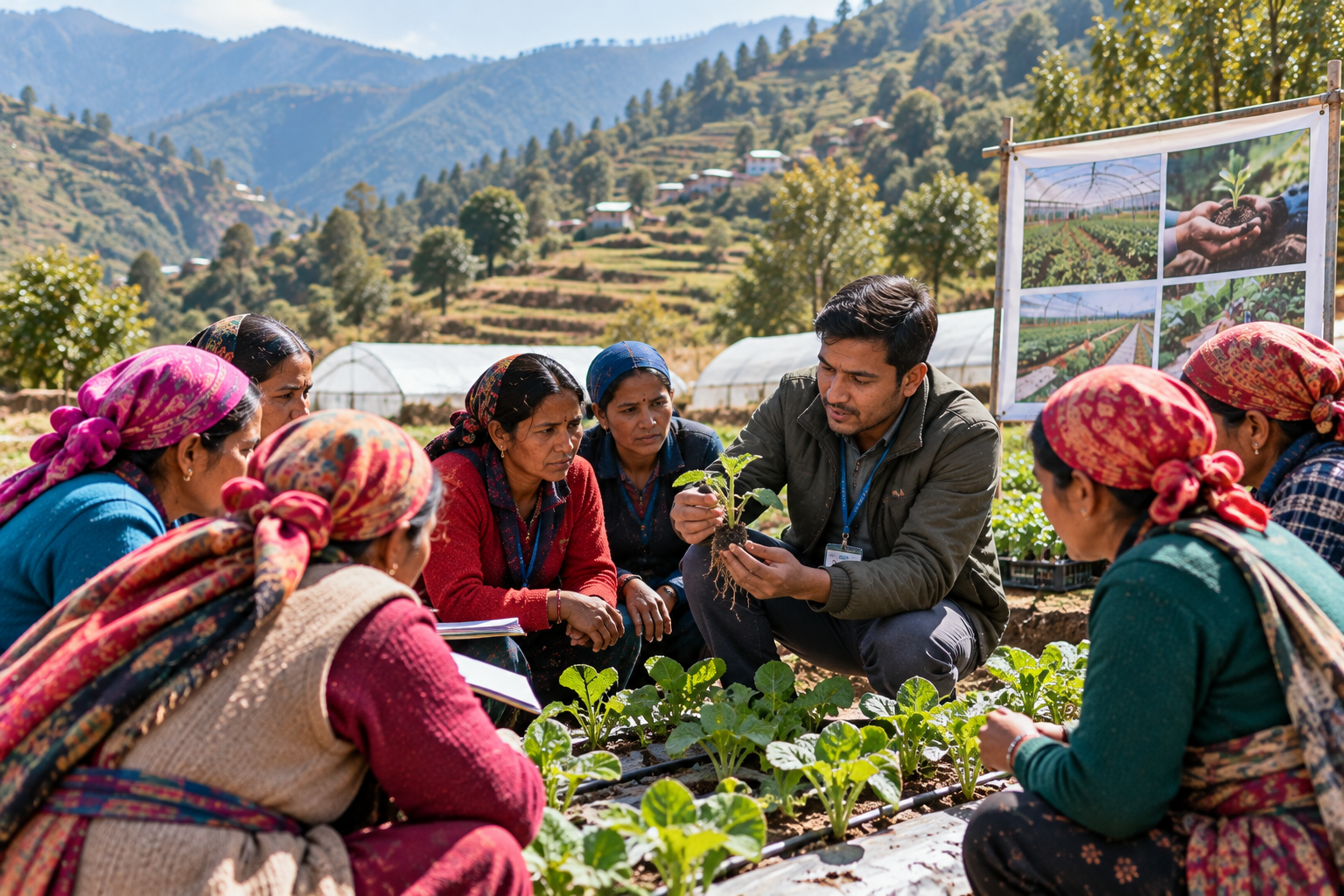
Project Utthaan brings agricultural livelihoods and local institutions together. Its focus includes context-specific, climate-resilient farming approaches, stronger Farmer Producer Organisations (FPOs), and support for Gram Panchayats and coordinated community action—all within one consolidated programme.
 EDUCATION AND SKILLING
03
A reading ecosystem for the hills.
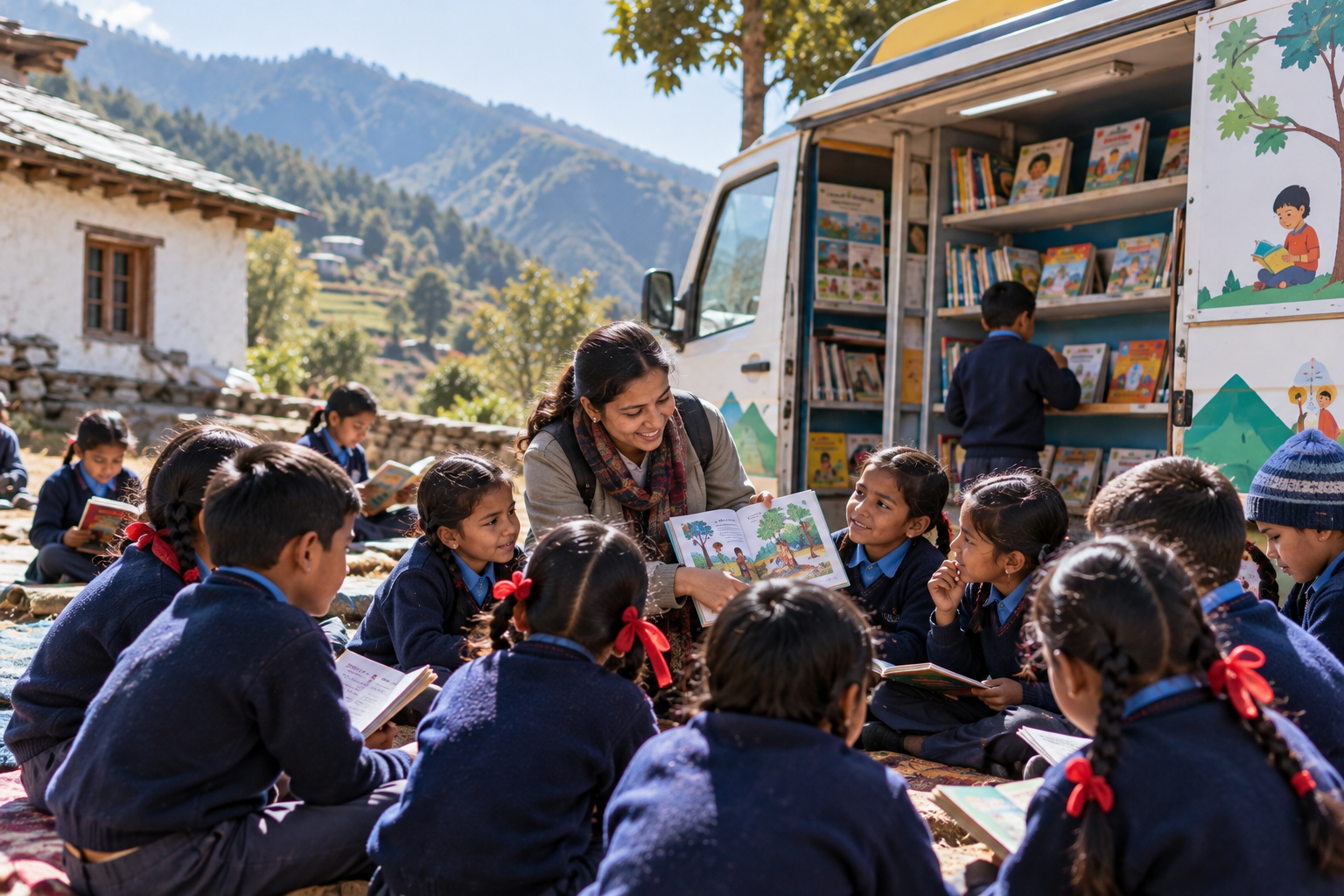
Project Akshar Yatra aims to improve access to books and reading spaces through model libraries, a mobile library, school reading activities and small community-managed book collections in Panchayat Bhawans.
 HEALTH
04
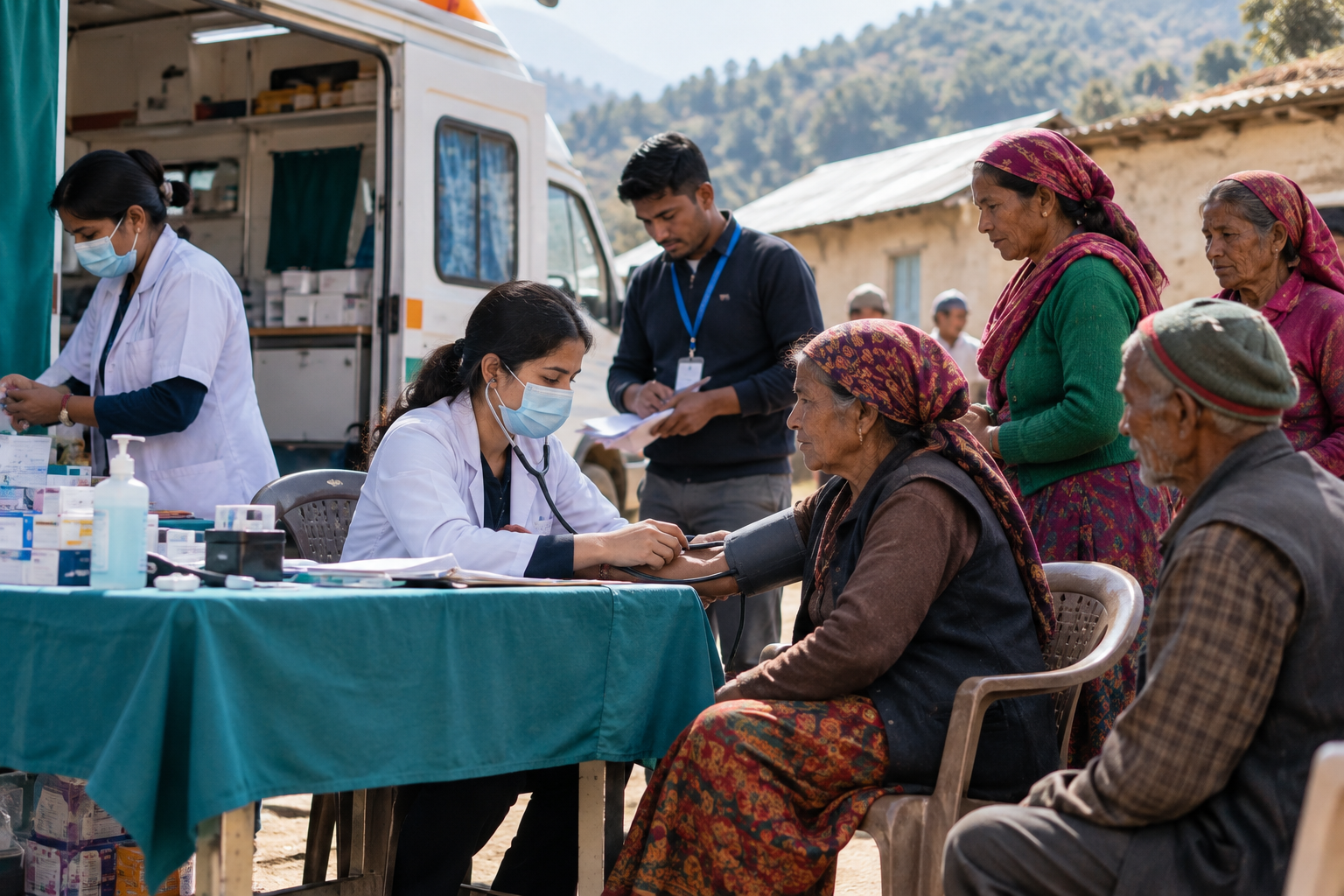
Taking health-related outreach closer to communities.
Swasthya Rath is designed as a mobile health initiative for underserved rural areas. The programme plan includes community mobilisation, health screening, point-of-care diagnostics and referrals to the public health system. The proposed coverage and services are detailed on the programme page.
 RURAL DEVELOPMENT AND WOMEN EMPOWERMENT
05
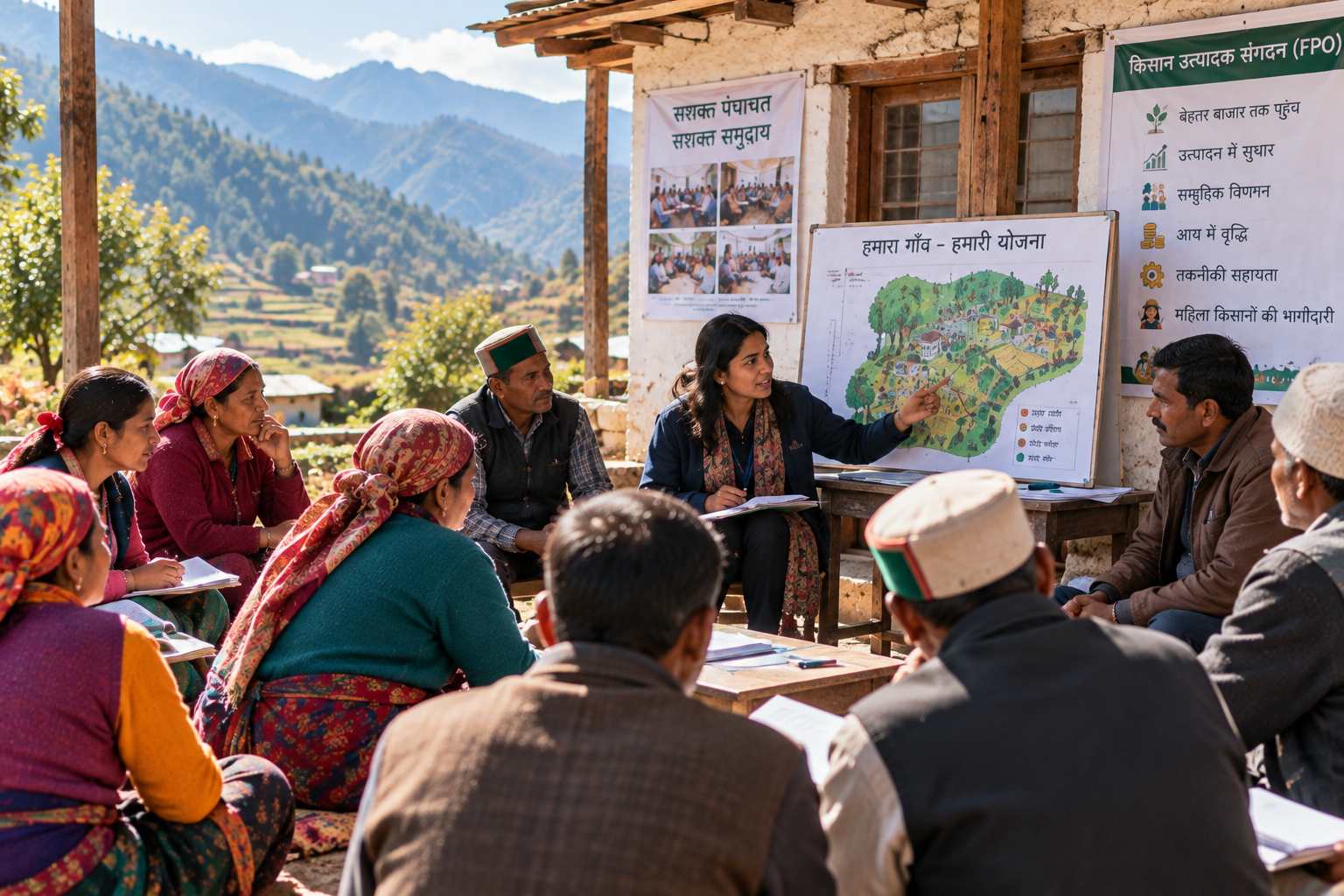
Local spaces for skills, information and opportunity.
Village Centres are designed to use existing Panchayat Ghars, government schools and community halls as accessible spaces for practical training, employability, information on government schemes and help with applications. The approach also supports inclusive local participation and opportunities for women.
Listen first. Act with purpose. Our approach starts with understanding local realities and working with people to identify relevant responses.
Listen to communities and learn about their needs and context.
Bring together local knowledge, partners and relevant expertise.
Support practical approaches that respond to identified priorities.
Use experience and feedback to inform future work.
We welcome conversations with individuals, institutions and organisations interested in community-centred development.